Key Facts About Homelessness
- It is important to recognise homeless people as individuals in crisis rather than stereotypes, and that like anyone else they deserve to be treated with dignity and respect.
- People are forced into homelessness when something bad happens and they don’t have the support of family or friends to fall back on. Many of these situations could happen to any of us: it might be redundancy, a relationship breakdown, poor mental health, alcohol/substance addiction or domestic abuse.
- People from a wide variety of backgrounds sleep rough on the streets of London each night, often in frightening, dangerous and degrading conditions. Like any other cross-section of society, many are highly personable, skilled, intelligent people, and many are highly motivated to find work.
- With the right help and support, people can and do move on and leave homelessness behind them. A variety of services provide this support, but they often struggle to secure enough funding to meet the high level of need. This need has increased significantly in recent months because of the economic downturn.
- If you would like to get involved, there are several ways you can help. All proceeds from our first concert will be going to The Connection at St Martin’s day centre, which provides specialist support to more than 200 homeless people each day. Please consider lending them your support by making a regular donation. Alternatively, you could give some of your time by volunteering with a homelessness charity near you. See our How You Can Help page for further details, and for information about other ways you can get involved.
Sleeping Rough
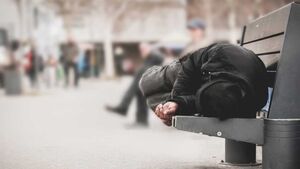
Sleeping rough on the streets of London is frightening, demoralising and isolating. Homeless people are some of the most vulnerable and socially excluded people in our society.
Homeless support agencies reported that around 3,500 people slept rough in London last year, which is almost half the number of rough sleepers in the whole of the UK. The life expectancy of a long-term rough sleeper is only 42 years, compared to 79 years for the average UK citizen[i]. A homeless rough sleeper is 35 times more likely to commit suicide than the average person in the UK[ii].
There is a common misconception that people choose to sleep rough out of choice. For the vast majority of people, who are forced into sleeping rough through difficult circumstances, this is not the case.
Hidden Homelessness
Hidden homelessness affects 400,000 people in the UK at any given time[iii]. The vast majority of homeless people exist out of sight in
- Hostels
- Temporary accommodation such as B&Bs
- Sofa-surfing (moving between friends’ houses)
- Squatting
- Living in conditions of severe overcrowding
When most people think of homelessness they think of someone sleeping on the streets. However, hidden homelessness is rife in London and affects an estimated 400,000 people at any given time in the UK[iv]. The vast majority of homeless people exist out of sight in hostels, in temporary accommodation such as B&Bs, crashing on couches, squatting, or living in conditions of severe overcrowding. All of these are as a result of having no other option. Living in such temporary and uncomfortable conditions leads to further problems. For example, how can you hold down a job if you don’t know where you will be staying from day to day, or if you cannot sleep because of overcrowding? It puts a tremendous strain on mental health and leads to further problems such as illness, relationship breakdown and social depravation.
It Could Happen to You - How Does Someone Become Homeless?
Without a strong system of support around a person, one incident can spark a chain of events that lead to homelessness. Triggers include:
- Marriage or relationship break-up
- Addiction to/dependence on alcohol, prescription or illegal drugs, or gambling
- Job loss, which leads to repossession or inability to pay rent
- Mental illness
- Physical illness
- Escaping an abusive relationship
- Getting into debt
- Death of a loved one
- Leaving institutions (such as army or prison)
Homelessness affects people from many different backgrounds for any number of reasons. The breakdown of a relationship is one of the biggest causes. Some people become homeless because of an addiction that has taken over their lives. Some people are escaping abuse and have nowhere to go. Others come from the armed forces and are finding it difficult to cope with civilian life. There are those who are unable to manage everyday life after the death of someone they loved. Physical illness can change someone’s life beyond recognition and can lead to depression and homelessness. There are countless causes and effects of homelessness that become inter-linked and, without a strong network of support, just one thing going wrong in someone’s life can set off a chain reaction that will lead to them sleeping rough on the streets.
Once a person finds him/herself homeless and on the fringes of society, it is extremely difficult to get back into an everyday routine of secure housing and employment. There are the obvious practical challenges such as finding somewhere to live, sorting out finances and rebuilding relationships, but also the experience of homelessness often leads to or exacerbates problems: illness (10 per cent of TB patients have a history of homelessness[v]), addiction, mental illness, isolation and loss of confidence resulting from low self-esteem are just some of the demoralising consequences of experiencing homelessness. Returning to a structured life and re-engaging with society can be a long and pain-staking process.
What are the Personal Effects of Homelessness?
The causes and effects of homelessness are often interchangeable – for example, depression could have caused someone to lose their home, but depression could also be the result of becoming homeless.
Homelessness can affect people in a number of ways:
- Lowered self-esteem
- Becoming institutionalised (diminished self-reliance as a result of using services over an extended period)
- Deterioration of mental and physical health (55% of homeless people have had no contact with a GP in the previous year[vi])
- Increase in substance misuse
- Loss of ability and will to care for oneself
- Increased danger of abuse and violence (a homeless person is 13 times more likely to be a victim of violence than average)
- Increased chance of entering the criminal justice system
- Development of behavioural problems
- Barrier to employment (77% of people living in hostels say they actively want to work.[vii])
Migrants, Refugees and Asylum-Seekers
There are many different reasons why people come to they UK. Some people come with the hope of making a better life for themselves or to make money that they can send to their families back home. Some people come here to escape countries where they have experienced violence, torture, famine, rape or lost members of their family. Many do find employment and housing. However migrants, asylum seekers and refugees are especially vulnerable to homelessness. They lack a network of friends and family able to offer support in an emergency. Language barriers, understanding British systems and limitations around entitlement make it harder for them to access support services and hostel accommodation. 2007 – 2008 CHAIN statistics found that 20% of London’s homeless were Central/Eastern Europeans and Eritreans.
Refugees and asylum seekers who have experienced torture or war are known to have high rates of mental disorder[viii]. Refugees from the war-torn East African country of Eritrea now represent 4% of those sleeping rough on the streets of London[ix].
A Case Study - Elayne’s Experience of Homelessness
I came from a very good family background; I was brought up by my mother and father with my only brother and had a very happy childhood.
My parents had extremely good morals and they instilled in me to be polite, respectful, honest and responsible.
Being mixed race - my father was Jamaican and my mother English – the challenges I faced in my early in life were difficult to deal with at times, but with the love of my parents and constant good advice made me strong and I turned out to be a very proud individual.
I started working when I was 16 after leaving school and had never been out of work until last year. I led a life with plenty of money, doing whatever I wanted to do, travelling to many different countries. Life has been sweet and I enjoyed it until I was made redundant in May 2009.
I was renting a 2-bed garden flat, and my redundancy package ran out while I was still looking for work. So I moved out and rented a studio. The council told me to get a tenancy agreement from my landlord [for housing benefit] – he refused and told me to get out.
I was blind as I had never been in this situation before. I spent weeks being told to go here, there, and everywhere. I became very depressed. My doctor put me on anti-depressants – I was suicidal, I had nowhere to go. I slept at different places and always had the car full of my life.
Things got so low in November 2009 that I took an overdose and was hospitalised. Thank goodness I am still here as it was a stupid thing to do, but my mind was not in its right frame.
One day in December I decided this was not going to beat me and concentrated on being as positive as I could trying every angle to find work and get my mind right. I looked forward to seeing the end of 2009 and concentrated on 2010 as being the turning point in this hard, hard, testing journey of my life.
2010 arrived and everything has changed. I am in full-time work in an ongoing temp role in the City, a place I love to work. I know a lot of people and shops around there.
I am going to see my bank in the City to see if they can help me with my debt situation.
All my stuff is still in storage but I can now afford the monthly payments. I have started saving a little each week and in a few months will be able to afford a deposit on my own flat. I am still living out of suitcases and staying with other friends and family from time to time but mostly I am staying at my brother’s and sleeping on his couch.
Its still a struggle dealing with my life but I have come through it and will be settled and happy in the summer of 2010.
I want to say a huge thank you to the services that have supported me, and to all the other kind souls I met along the way that showed me kindness and made me strong.
Elayne
How You Can Help
If you would like to get involved and make a difference, see our How You Can Help page for ways you can help.
Contact
[i] Crisis (1996), Still Dying for a Home
[ii] Crisis (1996), Still Dying for a Home
[iii] OSW
[iv] OSW
[v] A Story, S Gorton, J Glyn-Jones & A Hayward (2004), TB and Housing: Meeting the Needs of Homeless and ‘Hard to Treat’ TB Patients in London
[vi] Crisis (2002), Critical Condition
[vii] St Mungo’s (2005), Hard Work for Homeless People
[viii] Crisis (2009), Mental III Health in the Adult Single Homeless Population
[ix] Broadway (2009), Street to Home, Annual Report for London
Gabriella Cilmi
Date: 4th March 2010
Where: ICA
Cost: £15 - £1 booking
fee per ticket
BUY TICKETS >